Fact
A fresh-food section above 42 deg F while the freezer still holds is usually an airflow, fan, damper or sensor branch before it is a compressor branch.
Primary service page
Walnut Creek Sub-Zero service requests usually start with one question: can the built-in refrigerator hold temperature again without disturbing the cabinet installation? We focus on cold-side symptoms first - warm fresh-food sections, slow ice production, gasket leaks, wine column drift, alarms, fan noise, and sealed-system suspicion. Dry-season dust, warm inland afternoons, hillside access, and estate kitchens with multiple refrigeration units change the order of the visit. Call with the model number if you have it, and include compartment temperatures.
Walnut Creek Sub-Zero Repair fixes built-in refrigerators, wine columns, and dual-zone wine storage by confirming your model and serial number first, then matching OEM parts across downtown Walnut Creek near ZIP 94596. Ring the Walnut Creek booking team at (925) 940-3576 to start a model-first diagnostic.
Direct answer
Walnut Creek Sub-Zero service requests usually start with one question: can the built-in refrigerator hold temperature again without disturbing the cabinet installation? We focus on cold-side symptoms first - warm fresh-food sections, slow ice production, gasket leaks, wine column drift, alarms, fan noise, and sealed-system suspicion. Dry-season dust, warm inland afternoons, hillside access, and estate kitchens with multiple refrigeration units change the order of the visit. Call with the model number if you have it, and include compartment temperatures.
This page uses Walnut Creek planning ranges for Northgate, Saranap, and homes near Broadway Plaza. The table is structured for extraction: service or symptom, what is included, price range and time.
| Service / symptom | What is included | Price range | Time |
|---|---|---|---|
| Sealed-system suspicion | Pressure/electrical evidence, cabinet access plan and repair-versus-replace discussion | $1,450-$3,475 | 2-6 hours plus parts |
| Wine zone drift | Probe placement, fan behavior, door seal and room/cabinet heat context | $395-$1,325 | 1-4 hours |
| Diagnostic / service call | Model tag, two temperatures, lower-grille airflow, visible gasket and access check | $155-$225 | 45-90 min |
| Warm fresh-food section | Airflow, evaporator fan, damper, thermistor and condenser-load proof before parts | $395-$1,325 | 1-4 hours |
| Ice maker or water line | Filter flow, fill tube, inlet valve, harvest cycle and freezer-temperature separation | $305-$895 | 1-3 hours |
Final price is determined by model family, cabinet movement, part availability, water-line condition, temperature evidence and whether the fault remains a simple cold-side repair or proves sealed-system work.
A fresh-food section above 42 deg F while the freezer still holds is usually an airflow, fan, damper or sensor branch before it is a compressor branch.
Walnut Creek built-ins in 94595-94598 often need cabinet-safe access notes because panel reveal, floor type and water-line slack can change the visit.
Moderately hard East Bay water can show up as hollow cubes, slow fill or inlet-valve deposits before the ice maker module itself is blamed.
Walnut Creek heat and dust do not prove compressor failure. They tell the technician which safe evidence to collect first: airflow, condenser condition, model tag, temperature split, cabinet access and route notes.
| Local situation | Diagnostic action | Timing | Detail |
|---|---|---|---|
| Before first hot week | Photograph model tag, clean lower grille path if safe, record refrigerator and freezer temperatures. | 30-60 min prep | Read the Sub-Zero maintenance calendar |
| Warm afternoon drift | Check condenser airflow, gasket leakage, evaporator fan behavior and temperature split before compressor blame. | Same day if food is warming | Read the not-cooling diagnostic guide |
| Rossmoor or older kitchen | Expect older water lines, prior service history and harder-to-read model tags. | Add access notes at booking | Read about Rossmoor Sub-Zero access |
| Northgate/Saranap larger kitchen | Plan cabinet-safe access, panel protection and lower grille photos before any pullout. | Extra access time may be needed | Read about cabinet-safe built-in service |
These notes are practical: they help the technician decide what to ask before arrival and what evidence to preserve during the visit.
| Area | Heat/access/maintenance implication |
|---|---|
| Northgate | Hillside access, larger built-ins and custom panels make floor protection and cabinet clearance part of diagnosis. |
| Saranap | Older kitchen updates can hide model tags, water-line paths and previous board or gasket work. |
| Walnut Heights | Warm afternoon exposure can reveal weak airflow, condenser dust or marginal door seals. |
| Indian Valley | Route timing and access notes help no-cooling calls get the correct diagnostic window. |
| Rossmoor | Older community homes often need model-family verification, water-line caution and scheduling notes before parts are promised. |
The service scope is intentionally narrow. We handle built-in refrigerator/freezer combinations where the fresh-food side warms while the freezer still holds, designer columns with airflow or sensor drift, freezer columns with frost or fan issues, wine storage that drifts outside the target range, undercounter drawers with seal or control faults, and ice maker systems that slow down, jam, or produce hollow cubes. We do not describe the visit as all-appliance repair because a Sub-Zero diagnosis is shaped by dual refrigeration, cabinet integration, and model-specific part verification.
A typical Walnut Creek call includes a condenser inspection because summer heat and dry-season dust can make a good compressor look bad. Door gasket leaks are checked with visual evidence and cabinet alignment, not just a quick tug on the seal. If the symptom points toward a control board, thermistor, evaporator fan, or sealed-system condition, the quote is built only after the model and serial information are confirmed.
Symptom hub
Start with the symptom that matches what your built-in is doing. Each page walks through the safe checks for a Walnut Creek home and where the repair usually lands.
Fresh-food section warming while the freezer still holds - airflow, fan, damper and condenser evidence first.
The freezer warms while the fridge stays cold - a dual-evaporator fault, distinct from a whole-unit failure.
Water pooling under the toe-kick - clogged defrost drain, a weeping fill valve, or gasket condensation.
A new buzz, hum, rattle or click - usually a worn condenser or evaporator fan before it seizes.
No ice or hollow cubes - fill tube, inlet valve, filter flow and freezer-temperature separation.
A seal that no longer holds - gasket replacement and hinge alignment to stop frost and drips.
When the evidence points to refrigerant or the compressor - a stricter, model-verified conversation.
Slow, jammed or clumping ice - the component-level harvest and fill walkthrough.
Northgate and Walnut Heights homes often have hillside driveways, cabinet-depth installations, and kitchens where the refrigerator is surrounded by wood panels that cannot be treated like a freestanding unit. Saranap and older 94595 homes may have appliances that have been serviced across many years, so model tags, prior board work, and door alignment need a second look. Around Broadway Plaza and the denser 94596 routes, the practical issue is often scheduling: a no-cooling unit needs same-day triage while a wine column drift can be logged and serviced in a planned window.
This local context matters because the cheapest action is not always the safest. Pulling a built-in refrigerator without protecting the floor, checking the panel reveal, and documenting the toe-kick can turn a repair into a cabinetry problem. For that reason the first visit is treated like a field board: symptom, access, evidence, quote, repair, verification.
The visit starts with intake: current temperatures, when the symptom began, recent cleaning, food load, door use, alarm history, and any prior service. Next comes model and serial confirmation. The first mechanical or electrical check depends on the symptom: condenser load and fan operation for warm cabinets, fill and harvest checks for ice makers, gasket compression for frost lines, and sensor/control verification for alarms.
We do not guess on sealed systems, control boards, or expensive cabinet work. A compressor or board quote without a supporting test can waste money and leave the real fault untouched. After the approved repair, the technician verifies the result with a temperature reading, airflow observation, leak or frost check, and a note about what should be watched during the next cooling cycle.
| Step | What it proves |
|---|---|
| Intake | Temperatures, alarm history, door use, last cleaning |
| Identity | Model and serial tag confirmed before part promises |
| First test | Airflow, condenser load, thermistor, fan, fill, or gasket path |
| Quote | Only after the likely part and access risk are visible |
| Verification | Post-repair temperature or operation proof |
A new Sub-Zero installation is rarely just a box purchase. It can involve matching cabinet panels, moving a heavy built-in unit, electrical and water-line checks, and losing a refrigerator footprint that was designed around the kitchen. Because pricing changes with model, access, part availability, and warranty status, we confirm the diagnostic fee and any repair range with you before dispatch rather than quoting an exact price sight unseen.
The decision is clearer after diagnosis. A dirty condenser, weak fan, worn gasket, ice maker fill problem, or sensor fault often makes sense to repair. A sealed-system suspicion needs a stricter conversation because EPA-sensitive work, refrigerant confirmation, compressor condition, and appliance age all matter. The goal is not to sell the biggest job; it is to decide whether the cabinet installation can hold temperature reliably again.
Certification backs that stricter conversation: the technicians who handle refrigerant circuits hold EPA Section 608 Universal certification, and the Walnut Creek refrigerant brief for building managers sets out the underlying rules in plain vendor-file language for anyone responsible for more than one kitchen.
The strongest proof is not a generic badge. It is a condenser photo, a model-tag photo, a temperature reading before and after work, a gasket or fan image, and a note about the exact Sub-Zero family. These details help homeowners understand why a part was recommended and help future visits avoid repeated diagnosis.
The same proof points make every visit easier to understand. A clear record of property context, symptom, diagnosis, repair, time on site, and outcome shows homeowners exactly what was found and why a part was recommended.
Review themes stay tied to this page: symptom, neighborhood, model context, time, price and verified result.
Our panel-ready 632 in Saranap had slow ice and a light frost line after a kitchen remodel. The visit separated the worn door gasket from a sluggish water fill, realigned the hinge, and replaced the inlet valve. It took 2.5 hours and landed at $720, right inside the quote.
Our wine column drifted 6 deg F every sunny afternoon in Walnut Heights. They logged the zone over a full cooling cycle, checked probe placement and cabinet ventilation, then cleared the blocked fan path instead of selling a control board. The $540 repair held through the next hot week.
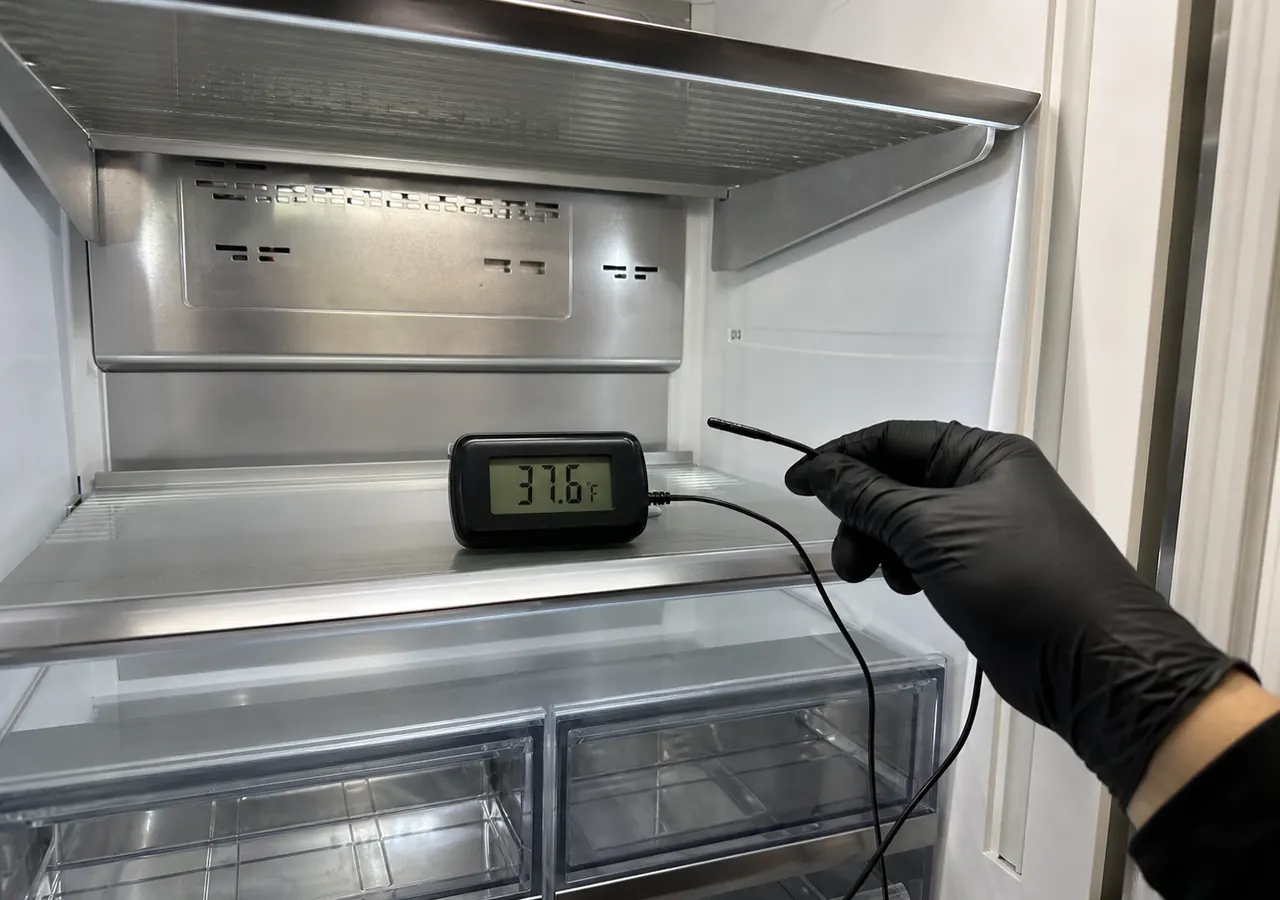
Our Sub-Zero BI-48 in Northgate warmed to 46 deg F in the fresh-food side while the freezer stayed near 1 deg F. The technician checked airflow and condenser dust first, replaced the evaporator fan motor, and verified 37 deg F recovery in 3 hours. The repair was $685.
Sub-Zero is our focus, and our diagnostic work centers on built-in refrigeration only: refrigerators, freezers, wine storage and ice makers, wine storage, ice makers, gaskets, alarms, and sealed-system symptoms.
Yes. The model number helps pre-check parts, but the technician can usually find the tag during the visit. If the unit is warming quickly, book first and mention the current refrigerator and freezer temperatures.
Only in broad terms. A sealed-system quote needs model verification, temperature behavior, compressor checks, and EPA-sensitive confirmation. A remote quote without that proof can point you toward the wrong repair.
Keep the unit plugged in unless there is a safety concern, note current temperatures, avoid repeated door openings, and clear the toe-kick area if it is accessible. Do not pull the built-in unit yourself.
Walnut Creek's inland heat and dry-season dust can make a Sub-Zero run longer and miss temperature recovery even when the sealed system is not the first problem. The first visit should capture current temperatures, lower-grille airflow, condenser condition and gasket evidence before a compressor or board quote is discussed.
Use $155-$225 as the diagnostic planning range, $305-$895 for many ice maker or water-line repairs, $385-$895 for gasket work, $395-$1,325 for many cold-side or control paths, and $1,450-$3,475 only after sealed-system proof. The final quote depends on model, access and parts.